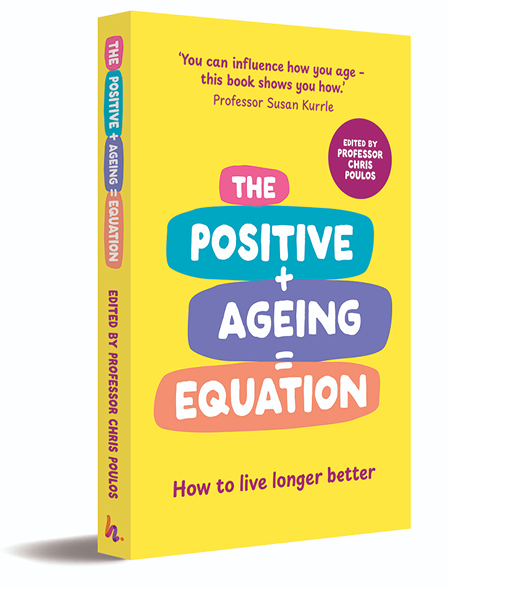
The Positive Ageing Equation - the new, practical approach for ageing well.
At a time when many books on health and wellbeing focus on attitude or optimism alone, The Positive Ageing Equation offers something different: a clear, evidence-informed framework that shows people of any age how to age well, in practical and achievable ways.

-
Ageing is complex. The equation is simple. And it could change the way you think about the rest of your life.
Rev Professor John Swinton
-
Ageing is a universal human experience, and ageing well is – and should be – an aspiration for all of us. The Positive Ageing Equation leads readers through both information and inspiration to help achieve this goal.
Dr Duncan McKellar
-
The authors empower readers to understand how ageing affects the body, influence outcomes through lifestyle and planning, and navigate the aged-care system with confidence.
Prof Maria Crotty
-
I came away with a much better understanding of my body and brain … This will be a tremendously valuable companion through the changes and challenges in the years ahead.
Leigh Hatcher
Packed with concepts for ageing well
Just some of the practical - sometimes surprising - lessons you'll explore in The Positive Ageing Equation.
-
MOVEMENT
30 minutes counts, if it makes you slightly breathless.
Moderate activity means breathing harder but still being able to talk. Add strength work at least twice a week.
-
INDEPENDENCE
Independence is what you can do, not the help you need.
Small changes to routines and surroundings compensate for changing capacity and preserve participation
-
BRAIN HEALTH
Looking after your heart also protects your brain.
Blood pressure, exercise and social connection aren't only heart-health issues. They're also linked with dementia risk.
-
FRAILTY
Frailty can improve. It isn't always a one-way decline.
Strength, balance and nutrition can rebuild lost capacity. Meaningful recovery is possible, even after a setback.
-
NUTRITION
Older bodies need more protein than you might expect.
Around 1–1.2g of protein per kilogram of body weight daily can help older adults preserve muscle and strength.
-
NORMAL AGEING
Ageing doesn't automatically explain a loss of ability.
Sudden change, pain or difficulty with normal activities are worth investigating, rather than simply “getting old”.
-
SOBER HABITS
Alcohol limits get more important as you get older.
10 standard drinks a week and no more than four in a day, with greater vulnerability after 60.
-
PURPOSE
Function is more than being able to look after yourself.
participation at a higher level means contributing to family, community, faith, and things that give life meaning.
-
CREATIVITY
Creativity can be part of ageing well, not just a hobby.
Creative activity combines mental stimulation, participation and connection. All three are key to functioning well.
-
CONNECTION
Participation is a real measure of how well you function.
Being able to contribute to family, community and society is a higher level of functioning.
-
PLANNING AHEAD
Build more capacity than everyday life actually requires.
“Functional reserve” is extra physical or mental capacity that is a buffer when illness or ageing takes some away.
-
DEMENTIA
Dementia changes abilities unevenly, not all at once.
Understanding what abilities are still strong can help someone keep doing meaningful things.
Edited by Professor Chris Poulos
Chris is a specialist rehabilitation doctor with over 30 years of clinical experience. In 2011, he established the Centre for Positive Ageing at HammondCare.
There, he reframed the term ‘positive ageing’ to focus on the positive steps everyone can take to improve their ageing journey, despite being challenged by health conditions or injury. He currently leads the Positive Ageing Research Program for Hammond Innovations.